When the insurance broker becomes the patient: medical emergency in Thailand
What happens when you need to use your international health insurance during a medical emergency abroad? Follow a real-life experience of receiving treatment across multiple countries, offering insights into healthcare abroad, insurance claims, and recovery while travelling. Whether you’re an expat, digital nomad, or frequent traveller, you will see why choosing the right international health insurance can make all the difference when the unexpected happens.
- When the insurance broker becomes the patient
- Scooter accident in Thailand: medical emergency abroad
- First real-life international health insurance claim experience
- Financial overview: how much did my emergency surgery in Thailand cost?
- Traveling after surgery: medical care across Hong Kong, China and Vietnam
- Recovery and final thoughts
- Frequently Asked Questions
When the insurance broker becomes the patient
For the better part of my professional life, I’ve helped people prepare for medical situations they hope will never happen. I’ve spent years advising full-time travellers, digital nomads and other location-independent individuals on how to protect themselves while traveling or living abroad. But there was one thing I had not experienced myself:
”I had zero personal experience with actually using my private health insurance”
– Christoph Huebner, Insurance Broker
For 22 years (!) I never filled a single claim. I’ve been insured with Barmenia since January 1, 2024. I know policy wording, claims procedures and underwriting requirements. I regularly explain these topics to my clients. But as it turned out, understanding insurance in theory and experiencing it as a patient are two completely different things.
That day in Thailand changed a lot…
Scooter accident in Thailand: medical emergency abroad
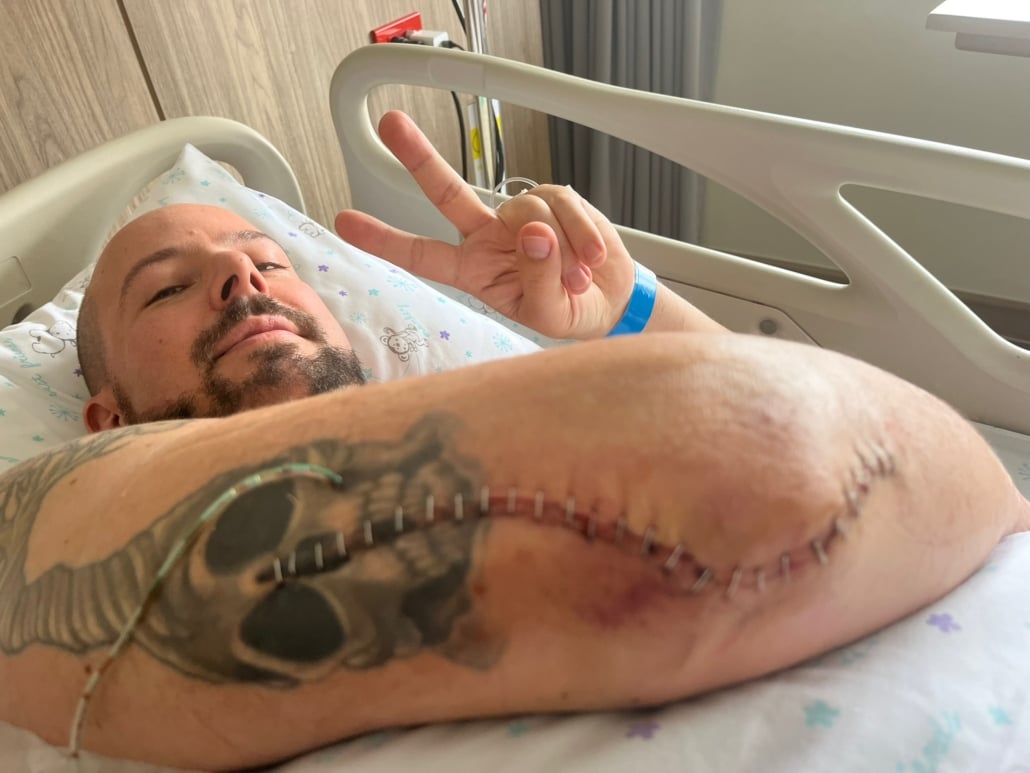
Everything happened quickly after my scooter accident in Chiang Mai. I remember my elbow took all the impact. I knew I needed medical attention, as this was definitely not a minor injury that would simply improve after a few hours. I headed to one of the major private hospitals in the city. I was amazed by how quickly I was taken care of.
“In hindsight, it felt like five minutes later I was sitting in a wheelchair with my arm on a pillow and ice packs on it.”
The entire process felt well organized: seeing a doctor, getting an X-ray done, no delays, no problems. While being injured, you appreciate such efficiency that gives you an enormous amount of reassurance.
First real-life international health insurance claim experience
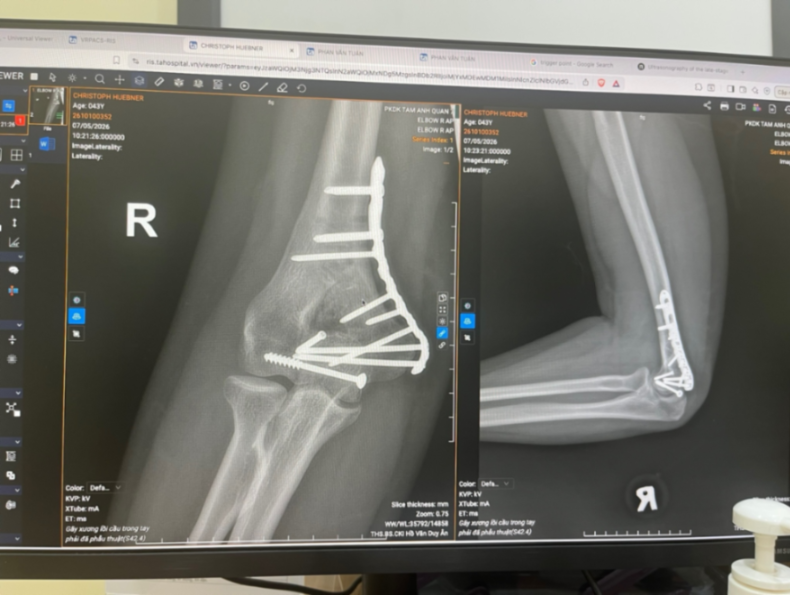
As I had already thought, the diagnosis confirmed – my elbow was broken. A half-cast was applied to stabilize the injury while further checks were being done. An MRI followed, and the decision was made: surgery was needed. This was the moment when my insurance became something real. I spent two nights at the hospital; the operation itself took about 3 hours.
As someone who advises clients on international medical coverage, it was quite fascinating to observe the process from the patient’s perspective for the first time. It was also the first time I had even broke a bone which added an extra layer of uncertainty to the whole experience. Now I was the person relying on the system to work.
And thankfully, it did.
Financial overview: how much did my emergency surgery in Thailand cost?
Even in countries many people perceive as affordable, serious medical treatments can get quite expensive. After the examination my arm was placed in a half-cast while doctors arranged MRI. The results confirmed – a surgery was necessary to repair the fracture. Before the procedure could go ahead, the hospital requested a payment guarantee directly from my insurer. There was a bit of delay because the guarantee was initially sent to me instead of the hospital. Once that was resolved the surgery was scheduled for the following day.
I spent 2 nights in the hospital, and the operation itself lasted around three hours. The hospital bill reached roughly 300.000 Thai Baht (a little over €8.000). The whole amount was covered by my insurer so I didn’t have to worry about the finances.
What struck me afterwards was the contrast between the cost of the surgery and the cost of the recovery process.
”(…) most of the aftercare later was surprisingly affordable”
– Christoph Huebner, Insurance Broker
Routine follow ups, physiotherapy and the rest of the recovery expenses were relatively inexpensive.
Traveling after surgery: medical care across Hong Kong, China and Vietnam
Two days after leaving the hospital and sorting out a few remaining matters in Chiang Mai, I was already on the go. From Hong Kong I continued my trip to China. Traveling with a broken arm is not ideal: The challenge was not only healing but also figuring out how to coordinate medical care across different countries and healthcare systems. Choosing a state hospital in Shanghai might not have been the best decision. But I wanted it like that: I went on my own, without even a friend accompanying me for translations. So I had to navigate the language barrier and the Chinese bureaucratic system that worked like a clock-work – for people with a Chinese ID card.
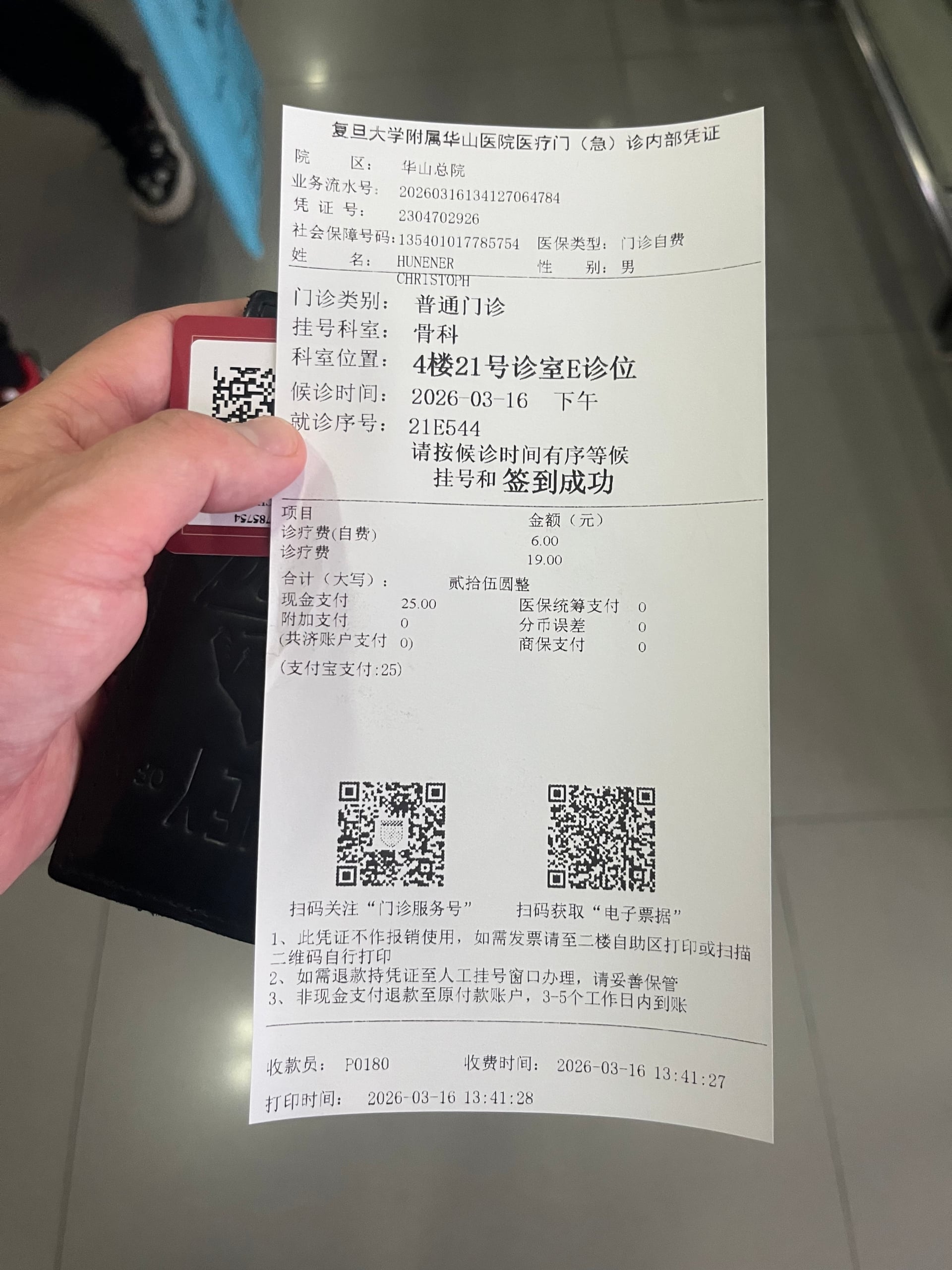
”What should have taken 20 minutes basically cost me an entire day.”
– Christoph Huebner, Insurance Broker
Most of my time wasn’t even spent receiving medical care, it was figuring out where to go next, waiting in different queues and trying to understand the process. It felt that I was lost in bureaucracy and in translation. But I have to admit – the medical care itself was perfectly adequate. My staples were removed successfully, and everything progressed as expected. However, the overall experience felt quite exhausting.
Recovery and final thoughts
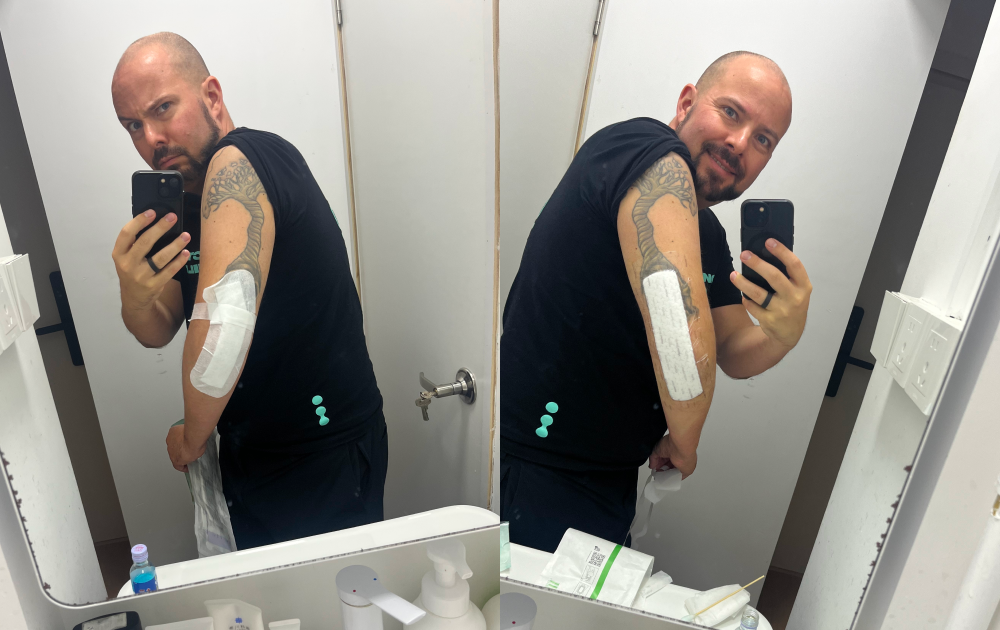
Anyone who has recovered from a serious injury knows that progress takes time; nothing happens overnight, and I could witness this myself. One day I realized I could tie my shoelaces again using both hands. Later came another milestone – I could brush my teeth with my right hand. Little by little, the recovery was progressing as I was celebrating these small victories. Even today I’m still missing a bit of movement, but I can feel things constantly improving.
Would I ever get on a bike again? I already did. Maybe not as a driver yet, but once my recovery is fully complete, I expect to ride a scooter myself again. This accident taught me to be more aware of risks, not to stop doing what I enjoy.
It was not only a medical event. It was a personal lesson in what good international health insurance actually means when life becomes unpredictable. Because you never expect to need it. But when you do, having the right cover already in place can make all the difference.
Frequently Asked Questions
Does international health insurance cover emergency treatment abroad?
Yes. Most comprehensive international health insurance plans cover emergency medical treatment abroad, including hospitalization, surgery, diagnostic tests, and specialist care. Coverage depends on your policy, but many insurers can arrange direct payment with the hospital through a guarantee of payment.
Can I continue traveling after a medical emergency abroad?
It depends on the severity of your injury as well as the doctor’s advise. After receiving a treatment it can be possible to continue traveling, although it may be necessary to arrange follow-up appointments in other countries.
How does direct billing work with international health insurance?
Many international insurers issue a Guarantee of Payment (GOP) directly to the hospital. This allows the hospital to bill the insurer instead of requiring the patient to pay large medical expenses upfront. Occasionally, minor administrative delays can occur before treatment proceeds
Is follow-up and physiotherapy covered by international health insurance?
Many international health insurance plans cover medically necessary follow-up care, including specialist consultations, imaging, physiotherapy, and rehabilitation. The exact level of coverage depends on your policy and whether the treatment is considered medically necessary.
Also, the difference between travel insurance and international travel insurance is huge: Travel insurance covers emergency care and expects you to return home for follow up care and rehabilitation. International health insurance covers all that wherever you are. Read more on the difference between the two.


