Your insurance might be a scam. We share how to find out.

Imagine a casino with no license, no inspections and no one checking the slot machines. Nobody would put their money in it, and you wouldn’t either. Now imagine a company that takes your monthly payment in exchange for a promise to cover your hospital bills if something goes wrong. If nobody is checking that company either, would you trust it with your health?
- Lottery and insurance are following a very similar logic
- Businesses built on low probabilities can be tweaked
- Who actually sells you the policy?
- "Licensed in the Caribbean" is not a reassurance
- A real case example with "undiagnosed pre-existing conditions"
- Final thoughts
- F.A.Q.: Frequently Asked Questions
Lottery and insurance are following a very similar logic
One is a game, the other is protection. But both work on the same principle: in both industries, many people each contribute a small amount of money into a collective pot, in hope of being on the right side in the event of an unlikely occurrence. In a lottery, everyone bets on winning the jackpot. With insurance, everyone wants to be protected from a stroke of fate. In both cases, it‘s about remote probabilities and ensuring that the money is actually there and gets paid out when the event occurs. That’s also why health insurance isn’t there for your €3.50 hay fever pills. It exists for the rare, existential events that could wipe out your finances.
| Lottery | Insurance | |
|---|---|---|
| Who pays | Many people, small amounts | Many people, small amounts |
| What are they paying for | A chance at a jackpot | Cover against a catastrophic event |
| Probability of the big event | Low | Low |
| Impact of the big event | Very high (win) | Very high (the bill) |
| What makes it work | Large numbers and low probabilities | Large numbers and low probabilities |
| Where it can be manipulated | Rigged machines, unpaid jackpots | Unfair claims handling |
| What makes it trustworthy | A regulator and a license | A regulator and a license |
| What happens without oversight | Shady operator, no recourse | Shady insurer, no recourse |
Businesses built on low probabilities can be tweaked
It’s easy to manipulate systems that run on large numbers and rare events. Someone can adjust a slot machine, the same way an insurer can change how it treats claims or how much it sets aside to pay them. That’s why we trust a casino when we know a regulator is checking the machines, and why we should trust an insurer when a regulator is checking how claims and finances are handled. Both businesses collect a lot of money upfront so they can pay out later.
A regulator’s job is to make sure that money is still there when the jackpot or the big claim arrives, and that the operator hasn’t disappeared with it and doesn’t evade to pay for claims with wild conditions.
– Christoph Huebner, Insurance Broker
In insurance that includes making sure the company has proper safeguards, such as reinsurance. The insurer you buy from covers the everyday risks. When a very large claim comes in or several big claims in a row that go beyond the average calculations, that’s when a reinsurer steps in. Oversight checks that these provisions exist and that the insurer is able and willing to pay.
Who actually sells you the policy?
Regulating the insurer is only one side of the coin. The other thing is distribution, so how insurance is sold to you. Regulated markets have some standards and requirements to meet. They are in place to make sure that you as a customer understand what the product actually is, who is selling it and where to go if things go wrong.
If you’re a European customer, you can complain locally and go to a court in your own country. That’s what makes the regulation of insurance distribution so powerful because as a customer, you have rights and you can enforce them. And even better so with a broker on your side.There is usually an ombudsperson in each country and a regulator that oversees the market. But that only works if the company has a legal representative in your jurisdiction. In EEA, which includes the EU plus Norway, Iceland and Liechtenstein, there is a single market for insurance. That means that a distributor only needs to be licensed in one country to serve customers across the whole area. By contrast in the US you need a license in every state you want to sell in.
We, NOMADS.insure as insurance brokers licensed in Estonia and verified in the public register of Finantsinspektsioon, Estonia’s financial supervisory authority, can serve customers across Europe. We do it by respecting regulation, following consumer protection rules and playing by the book. On top of that, we also have to have a Professional Liability Insurance. That means that if we ever gave you the wrong advice and it caused you a loss, this cover ensures that you’re compensated, not left covering the cost yourself.
If we can do it, so can anyone. If a company doesn’t do it, well, most likely they have something to hide.
“Licensed in the Caribbean” is not a reassurance
If a company is trying to hide behind some random licenses, take that as a warning and better look for alternatives. We see that some providers hold nothing more than an offshore license. A license that doesn’t allow a company to sell insurance to everyone, everywhere. Selling insurance across borders means meeting local requirements and distribution standards and an offshore license can’t replace that. Before you buy, you should always know:
- where to go if something happens and you need to file your claim
- who to contact if the claim gets denied
- which court to file in if it comes to that
If the answer is ”somewhere in the Caribbean”, then you should walk away because at this point you’re not buying insurance, you’re buying a promise of it from from a stranger. We can’t stress this enough. And if a company kinks that they are based out in San Francisco and Oslo: double-check that!
At the same time we understand why digital nomads seem to be quite relaxed about this. Many of us run businesses through offshore structures. Buying Meta ads through an agency in a random location might not surprise us as much. That’s quite normal in this world. But an insurance company you trust with your life and health is a completely different thing.
You need to be really careful and don’t let your guard down here with your health as the stake.
– Christoph Huebner, Insurance Broker
A real case example with “undiagnosed pre-existing conditions”
Pre-existing conditions are defined in Western markets as something you knew about or must have known about, when you took out the insurance policy. Some providers with offshore licenses use a different definition. They call a pre-existing condition anything that is diagnosed or undiagnosed which leaves the door open for the insurer to walk away from a claim almost whenever it wants.
For example, there is a case involving one of our own customers who had been ”covered” by such a provider. She needed emergency surgery for an ovarian cyst and the insurer denied the claim. The reasoning? According to them a cyst doesn’t grow overnight, so it must have been there when she signed up, and therefore it counted as an undiagnosed pre-existing condition. Insurers operating under proper regulation and respecting the rules can’t simply do this and a European consumer has legal ways to fight it. A denial by the insurance company on such weak grounds is simply unlawful from a European perspective. But if your ”insurance” hides behind a Puerto Rico offshore license, there is little legal.
Final thoughts
Before you buy insurance, find out who regulates the company and make sure that it’s a regulator you can actually contact. And that they are in a country with real consumer protection. We would also advise checking if the company has a legal presence where you live or where you could realistically take it to court. If something goes wrong you need a real address and a real court, not a mailbox halfway across the world. And know your rights as a customer: in regulated markets you have an ombudsperson, a complaints route and the right to go to court.
You would never gamble in an unlicensed casino, so don’t gamble your health on an unlicensed insurer. As brokers we’re not tied to any single insurer, our job is to stand on your side and help you find coverage that will actually be there when you need it. We only work with providers that pass our own check for proper regulation and a solid track record so you can skip the guesswork. See why pick us as your insurance broker.
F.A.Q.: Frequently Asked Questions
How can I check whether an insurance company is really regulated?
Start with the company’s website and look for the name of its regulator. Then verify it yourself on the regulator’s official public register, rather than trusting a logo or badge on the site. In Europe most national regulators publish searchable registers of licensed insurers and brokers. If you can’t find a regulator, treat that as a red flag.
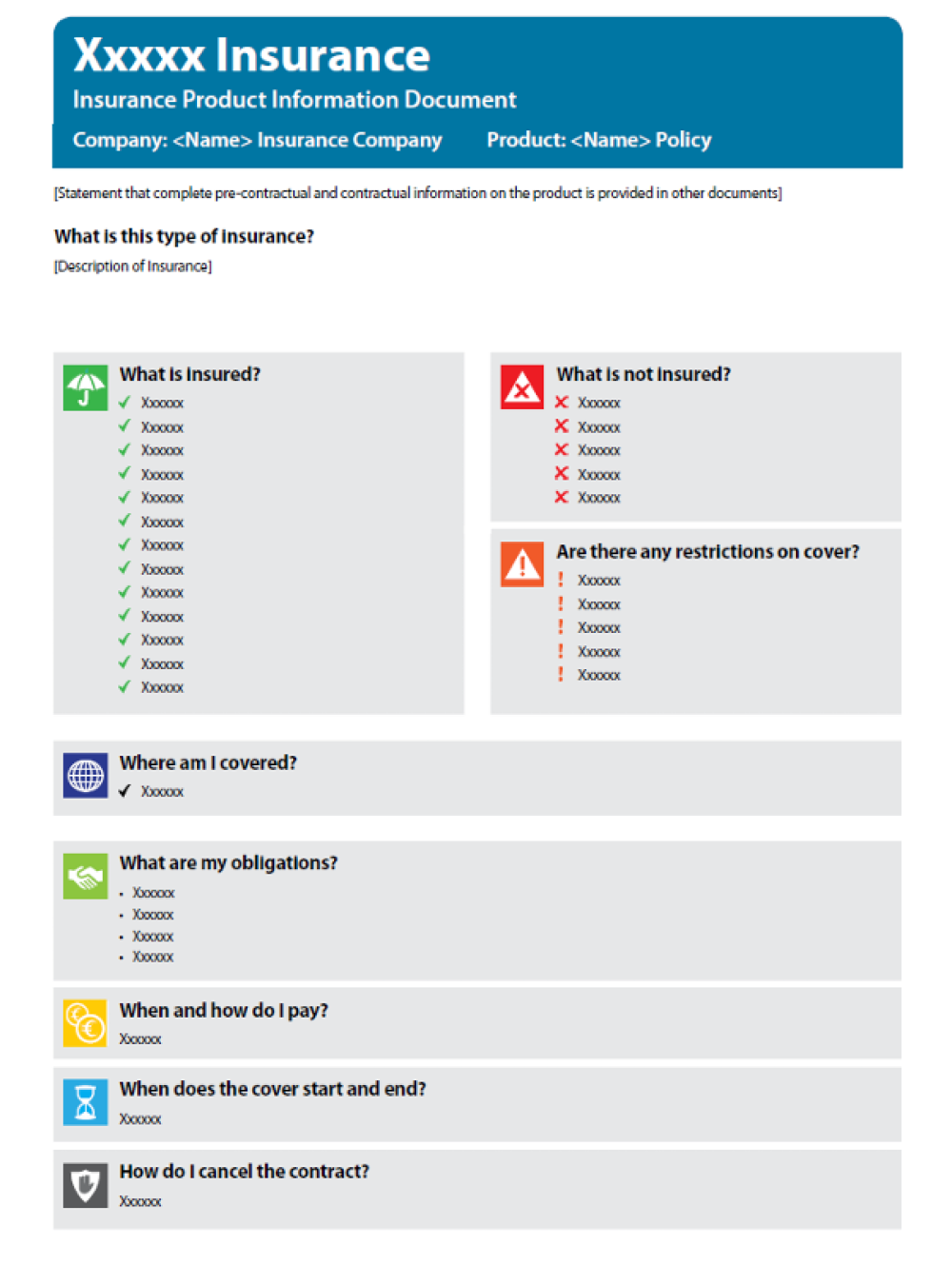
You can also look for the IPID – the Insurance Product Information Document. This is a European standard document that every insurance product sold in Europe must provide. It’s a simple, standardized summary of what the product covers, what it excludes and how you can terminate the contract. A legitimate, regulated provider will have one for every product it sells. If you can’t find an IPID for the policy you’re interested in, the provider might not be following EU distribution rules.
What does ”offshore license” actually mean?
An offshore license is a government permit that allows an insurance company to operate from a foreign financial center and offer coverage outside that local jurisdiction. Such licenses typically come with little to no oversight of the company’s finances, claims handling or conduct. They usually have no consumer protection rights for selling to customers abroad. Most of the times there is no ombudsperson to turn to, no local regulator monitoring the company and no requirement for the insurer to have any legal representation in the countries where it sells.
Is an offshore license always a bad sign?
An offshore license on its own doesn’t allow a company to sell insurance to customers in other countries. Selling across borders means meeting the local requirements and distribution standards of the markets served. If a company relies only on an offshore license and has no regulated presence where its customers live, you may have no clear way to complain or to enforce a claim.
What can I do if my claim is denied?
First ask the insurer for the denial in writing, with the exact policy clause it relies on. Then file a formal complaint with the company. If that doesn’t resolve it, you can turn to the ombudsperson or the regulator in your country, and finally to a court. But this route only works if the insurer is properly regulated and represented where you live, which is why it’s worth checking that before you buy a policy.
You can also reach out to a broker. We know how insurers typically justify denials so we can help you push back with the right arguments. In corner cases we can also point you toward the ombudsperson or regulator if the insurer won’t budge.


